Events
- Hits: 10
What can I do?
UKEF can only help with your help! This according to the South African Ubuntu belief, the belief in a universal bond of community that unites humanity.
Together we can build a school, as a first step towards rebuilding a war-torn society.
A step that can give courage and hope. We welcome all contributions - ideas, time or money.
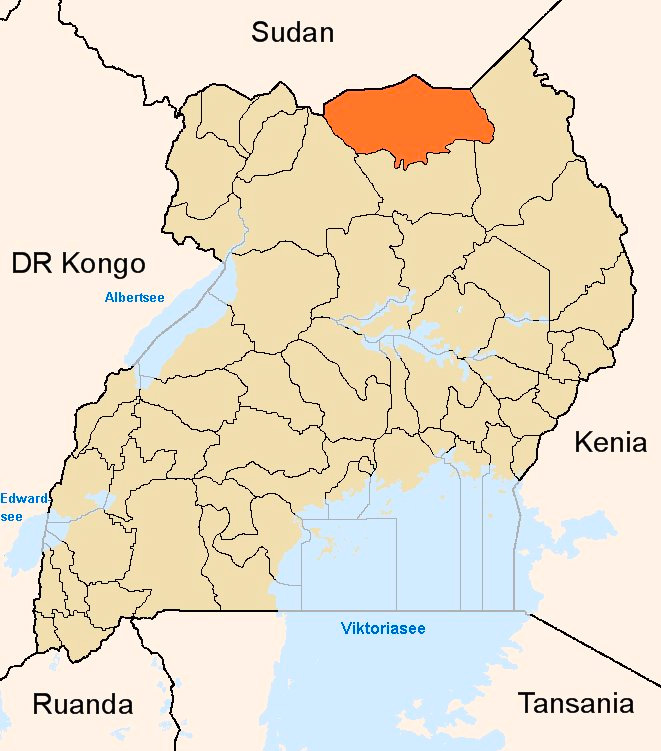
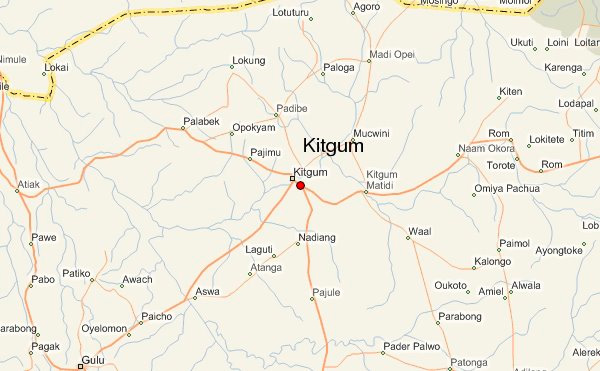
Kitgum District is one of the remotest and most impoverished districts in Uganda. Kitgum borders wapen van ugandaSouth Sudan (Republic) to the North, Kaaabong District to the east, Kitodo District to the Southeast, Agago District to the south, Pader District to the southwest and Lamwo District to the northwest. Kitgum is a constituent part of Acholiland, home to an estimated 1.1 million people, according to the 2002 National Census. The district headquarters is approximately 452 kilometers (281 miles), north of Uganda's capital, Kampala.
Uganda, officially the Republic of Uganda, is a landlocked country in East Africa. Uganda is bordered on the east by Kenya, on the north by South Sudan, on the west by the Democratic Republic of the Congo, on the southwest by Rwanda, and on the south by Tanzania. The southern part of the country includes a substantial portion of Lake Victoria, shared with Kenya and Tanzania.
Uganda takes its name from the Buganda kingdom, which encompasses a large portion of the south of the country including the capital Kampala. The people of Uganda were hunter-gatherers until 1,700 to 2,300 years ago, when Bantu-speaking populations migrated to the southern parts of the country.The area was ruled by the British beginning in the late 1800s. Uganda gained independence from Britain on 9 October 1962. The period since then has been marked by intermittent conflicts, most recently a civil war against the Lord's Resistance Army.
The official languages are English and Swahili. Luganda, a southern language, is widely spoken across the country, although multiple other languages are spoken in the country. The current President of Uganda is Yoweri Kaguta Museveni
Geography
The country is located on the East African plateau, lying mostly between latitudes 4°N and 2°S (a small area is north of 4°), and longitudes 29° and 35°E. It averages about 1,100 metres (3,609 ft) above sea level, and this slopes very steadily downwards to the Sudanese Plain to the north. However, much of the south is poorly drained, while the centre is dominated by Lake Kyoga, which is also surrounded by extensive marshy areas. Uganda lies almost completely within the Nile basin. The Victoria Nile drains from the lake into Lake Kyoga and thence into Lake Albert on the Congolese border. It then runs northwards into South Sudan. One small area on the eastern edge of Uganda is drained by the Turkwel River, part of the internal drainage basin of Lake Turkana.
Lake Kyoga serves as a rough boundary between Bantu speakers in the south and Nilotic and Central Sudanic language speakers in the north. Despite the division between north and south in political affairs, this linguistic boundary runs roughly from northwest to southeast, near the course of the Nile. However, many Ugandans live among people who speak different languages, especially in rural areas. Some sources describe regional variation in terms of physical characteristics, clothing, bodily adornment, and mannerisms, but others claim that those differences are disappearing.
Mount Kadam, Uganda
Although generally equatorial, the climate is not uniform as the altitude modifies the climate. Southern Uganda is wetter with rain generally spread throughout the year. At Entebbe on the northern shore of Lake Victoria, most rain falls from March to June and in the November/December period. Further to the north a dry season gradually emerges; at Gulu about 120 km from the South Sudanese border, November to February is much drier than the rest of the year.
The northeastern Karamoja region has the driest climate and is prone to droughts in some years. Rwenzori, a snowy peaked mountainous region on the southwest border with Congo (DRC), receives heavy rain all year round and is the source of the Nile. The south of the country is heavily influenced by one of the world's biggest lakes, Lake Victoria, which contains many islands. It prevents temperatures from varying significantly and increases cloudiness and rainfall. Most important cities are located in the south, near Lake Victoria, including the capital Kampala and the nearby city of Entebbe.
Although landlocked, Uganda contains many large lakes; besides Lake Victoria and Lake Kyoga, there are Lake Albert, Lake Edward and the smaller Lake George.
Source : WIKIPEDIA
Kitgum district suffered the worst effects of not only the Lord’s Resistance Army (LRA) rebels’ insurgency with thousands of people losing their lives and many others forced to live under dehumanizing conditions in internally displaced people’s (IDPs) camps but also the tribal cattle raids of neighbouring Karamojong pastoralist.
With the silence of the gun, the lives of the people who survived the armed conflict, displacement and subsequent loss of access to their agrarian-based livelihood system in the district; have experienced significant changes towards recovery.
Many people have returned to their ancestral homes and embraced the challenges of rebuilding their lives and communities while living conditions remain basic. The population depends largely on firewood as the main source of energy. Access to clean drinking water remains limited with many families having to walk long distances to fetch clean drinking water. Land disputes are rampant as families and clans try to demarcate their land from their neighbours after over 2 decades of displacement. Many children in the district have no access to basic formal education despite the existence of Universal Primary Education (UPE) in theory.

UKEF is an entirely volunteer-run foundation.
Nestar Lakot and Ed Grassere ensure the continuity of the project through their personal contribution.
The funds raised through donations, action programs, sponsorship and through fundraising are paid directly to the projects.
This is done without the intervention of third parties. The audit of expenditure shall be controlled from the Netherlands and in Uganda through our school board.
For example, if board members or other parties involved travel to Uganda, this is at their own expense
We limit the cost of the foundation to a minimum, unfortunately, completely free of charge is not possible. For example; bank charges.
In the Netherlands, the UKEF foundation only works with unpaid volunteers. The costs incurred in the Netherlands relate to management costs (bank and postage costs, registration costs at the Chamber of Commerce, etc.) and to PR (for example, having information material printed, website costs, etc.) printed.
The annual accounts for the period 2013 to 2019 show that the annual costs incurred in the Netherlands are on average 2.5% of the annual income of the foundation. This amply meets the requirement set by the Tax and Customs Administration for an ANBI.
If costs are made by volunteers, they will be reimbursed on the basis of actual costs incurred.
Directors in the Netherlands also receive no financial compensation
Of all the gifts, 90 to 95% go directly to our projects.
If you want to know more about our projects and finances, please contact us,
Donations to charity are tax deductible expenses. These donations can reduce your taxable income and lower your tax bill. Not everyone will be able to deduct their charitable contributions, however. You will need to itemize your tax deductions in order to claim any charity.
"You may deduct charitable contributions of money or property made to qualified organizations if you itemize your deductions." (IRS Publication 78)
Please check your local tax office for local regulations.
Information for Bussines and Organisations :
For your donations we can make invoices. So that you can register your donations to us within your financial system.
Read more …Financials and Tax returns
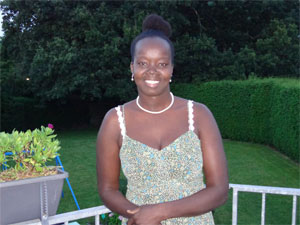
Born and raised in Kitgum District, Northern Uganda during the two decades of civil war between the nestarLord's Resistance Army (LRA) and the government of Uganda, Nestar experienced firsthand - life in the midst of civil war. In 1989, her family got displaced from their ancestral farm-home in Ogako Village, Padibe East to a small village in Kitgum Town Council after losing two of her brothers to the brutality of the LRA. Their home and possessions reduced to ashes.
After graduating from Makerere University, Kampala in 2005, Nestar returned home (in Kitgum) to work for AVSI - an International Humanitarian Organisation, providing relief and development services to the Internally Displaced Persons (IDPs) in Kitgum and Pader Districts, Northern Uganda. Kitgum Diocese nominated Nestar to participate in an International Visitor's Exchange Program (IVEP) of Mennonite Central Committee (MCC) in 2006. The IVEP year in North America provided her and many other young people around the world an opportunity to work and live in North America; to share their cultures and experiences while learning the cultures of their host countries. Nestar lived in Winnipeg, Canada and volunteered as a Youth Engagement and Programme Intern at the Canadian Foodgrains Bank - a partnership of Canadian churches and church-based agencies with a mission to end global hunger. With her work, Nestar travelled across Canada - what a life changing year it was!
With generous support of friends in Canada and a partial scholarship from Maastricht University, Nestar left her country again for the Netherlands in 2008 to pursue a masters degree in Public Policy and Human Development. Her dream was to return to Uganda to help in rebuilding the community. However, Nestar continues to live in the Netherlands following her son's open heart surgery. She likes to give him the opportunity to access proper health care (as he still needs regular medical check-ups); an opportunity many parents can only dream of in Uganda. Togehter with here Husband Ed Grassere she founded UKEF in february of 2013.
Nestar's motivation to support children's education and found UKEF is her son's successful open heart operation. She thinks about many disadvantaged children around the world who never have the privilege her son had. She recognises that her son would not have had the operation if he had been in Kitgum, the community she hopes to support. Nestar dedicates this project and the school in honour of her son with the hope that it will create among other professionals more doctors, surgeons to provide proper health care and save lives in less fortunate communities.
Given the talent and available resources, what is the most effective way to help vulnerable communities? We are convinced that the best way to help those in greatest need is to invest in their future through providing opportunities for education. UKEF is confident that together, we can build a school that will provide affordable and quality education to the children of Uganda. To Nestar, education has been an eye opener and the reason she is able tell her story. She believes, each child in this world, irrespective of where he/she lives must have this chance to be able to one day tell their own stories to the world and education is the tool.
UKEF aims to build physical infrastructure and encourage a self sustaining curriculum. It promotes a teaching philosophy that embraces the local culture while at the same time bridges cultural differences. We ensure that Special-Needs children who would otherwise, not be able to attend school get financial and social support to be able to attend school. UKEF delights that you have an interest in Uganda. We earnestly hope that you will consider partnering with us in the effort to realize this Great Commission.